
What Is an Area Drain and When Does a Commercial Property Need One?
An area drain is a drainage system designed to collect rainwater and surface runoff and carry it away from areas where water would otherwise pool or cause flooding. Commercial properties may need area drains when large roofs, parking areas, sidewalks, courtyards, or low spots concentrate significant amounts of stormwater in one location. Proper pipe sizing, slope, and collection points are critical for the system to work effectively.
At East Texas Leak Locators, we help property owners solve drainage and plumbing problems by identifying why water is accumulating before recommending a solution. Area drainage is especially important for large commercial properties, where thousands of square feet of roof or paved surfaces can produce a significant amount of runoff during a Texas rainstorm. One recent project in Tyler involved an approximately 60,000-square-foot commercial building that experienced flooding whenever the area received more than about an inch of rain in 24 hours. The existing drainage system simply needed improvements to better manage the volume of water reaching the property.
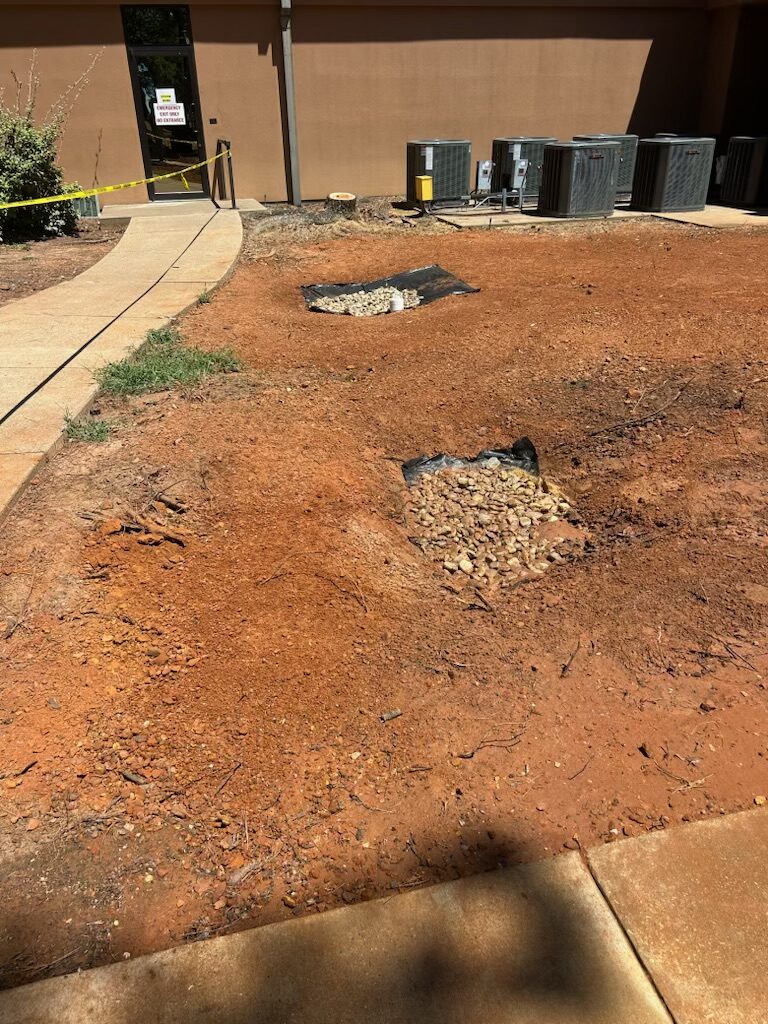
How Commercial Area Drains Help Prevent Stormwater Flooding
Area drains give rainwater a controlled place to go instead of allowing it to collect around a building or other low-lying areas.
A typical system uses drains or collection boxes at strategic locations to capture surface water. Underground drainage piping then carries that water toward an appropriate discharge point.
Area drains can be particularly useful around:
- Commercial buildings
- Courtyards and patios
- Sidewalks and pedestrian areas
- Parking and loading areas
- Low spots around buildings
- Areas receiving water from roof downspouts
- Locations where water repeatedly pools after rain
The size and design of an area drainage system should match the amount of water it is expected to handle. On a large commercial property, that can mean considering much more than simply installing a drain where water is standing.
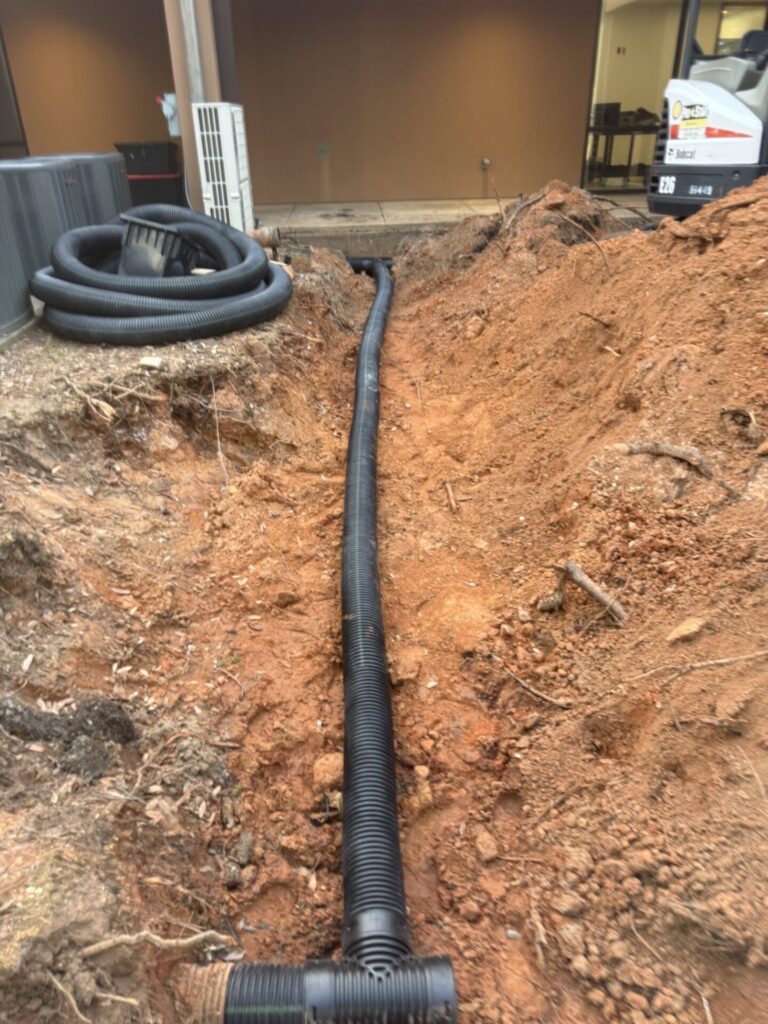
How Do Area Drains Work?
An area drain collects surface water and uses underground piping and gravity to move it away from the problem area.
Water first enters through a drain, catch basin, or collection box. From there, underground piping transports it away. For a gravity-based system to work properly, the piping needs adequate slope, often referred to as “fall.”
Several parts of the system work together:
- Collection points capture the water.
- Drainage piping provides a path for the water to travel.
- Proper fall helps gravity move the water through the pipe.
- An appropriate discharge point allows the water to leave the system.
If one of these components is inadequate, the property may still experience standing water or flooding.
For example, adding a collection box may help capture more surface water, but that does little good if the underground pipe cannot carry the incoming water away fast enough.
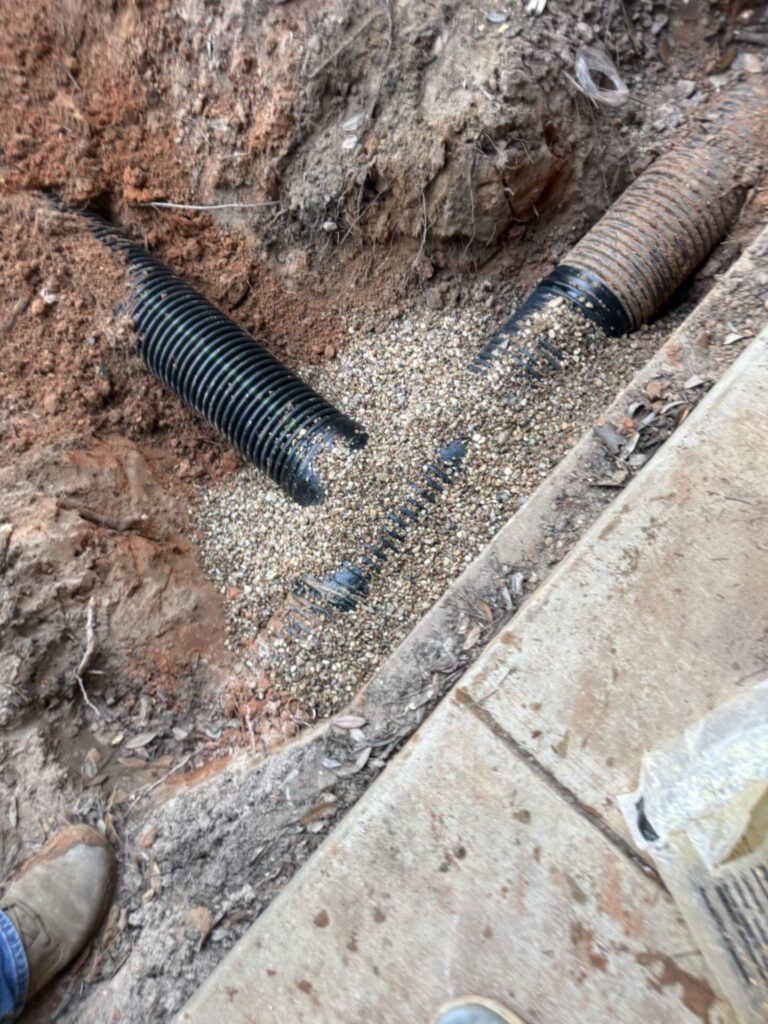
When Does a Commercial Property Need an Area Drain?
A commercial property may need an area drain when rainwater consistently collects in the same location instead of naturally flowing away from the building.
Repeated standing water is one of the easiest warning signs to recognize. Property owners and facility managers should pay attention to areas that flood during moderate or heavy rainfall, especially when the problem occurs repeatedly.
Signs that an area drain or drainage improvement may be needed include:
- Water pooling around a commercial building
- Flooding near entrances or walkways
- Large amounts of roof runoff concentrated in one area
- Water collecting around downspouts
- Existing drains overflowing during storms
- Standing water that remains long after rainfall stops
- Low spots that repeatedly fill with water
- Existing drainage piping that cannot keep up during heavier rain
Large commercial roofs deserve particular attention because they can collect substantial amounts of rainwater.
One inch of rain falling on one square foot of surface represents approximately 0.623 gallons of water. That means even a portion of a large commercial roof can produce thousands of gallons of runoff during a storm.
The drainage system has to be capable of collecting and moving that water.
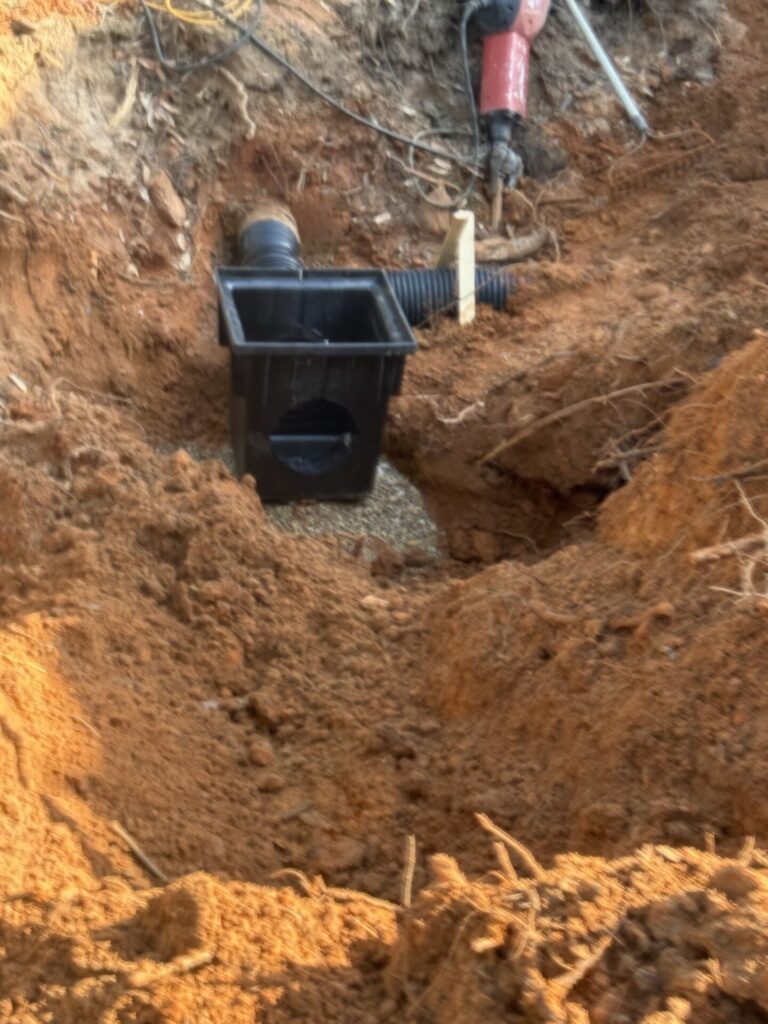
Why Did This Tyler Commercial Property Need Better Area Drainage?
This Tyler property needed an area drainage upgrade because a very large building was directing rainwater toward a drainage system that struggled to keep up during heavier rainfall.
The commercial building is approximately 60,000 square feet, and its rainwater is directed through just four downspouts.
The property owner noticed a consistent pattern. When Tyler received more than approximately one inch of rain within 24 hours, the entire affected area would flood.
That repeatable pattern provided an important clue. Instead of treating the standing water as an isolated problem, our team looked at how the overall drainage system was handling the incoming water.
The existing underground drainage line was only 4 inches in diameter.
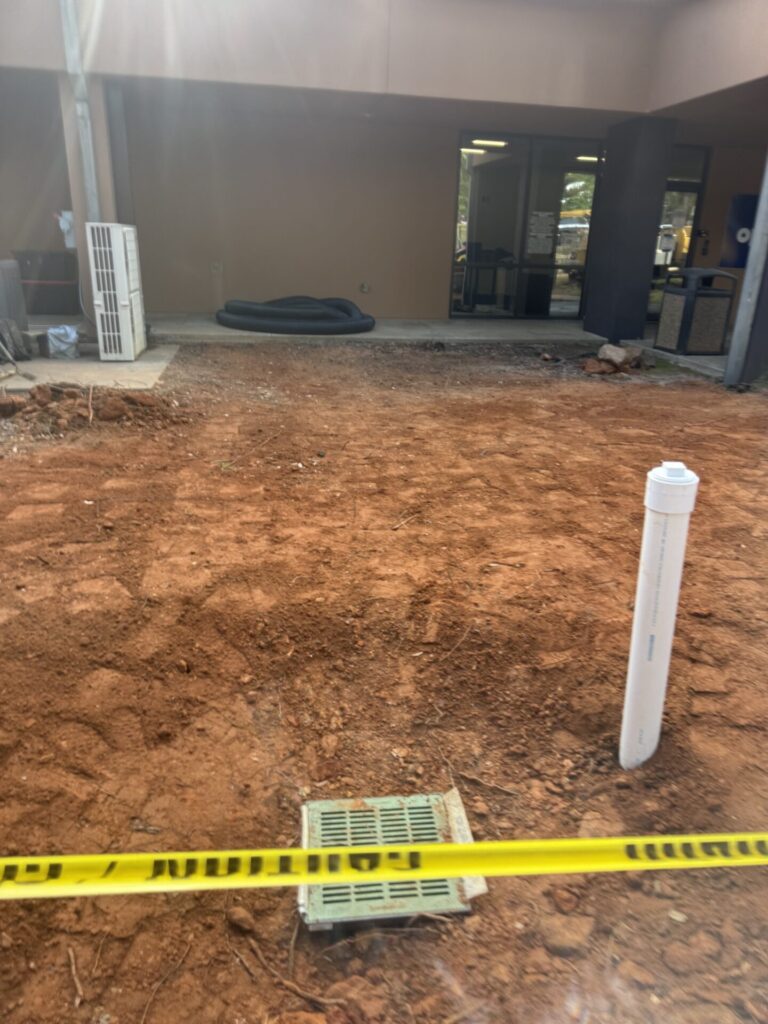
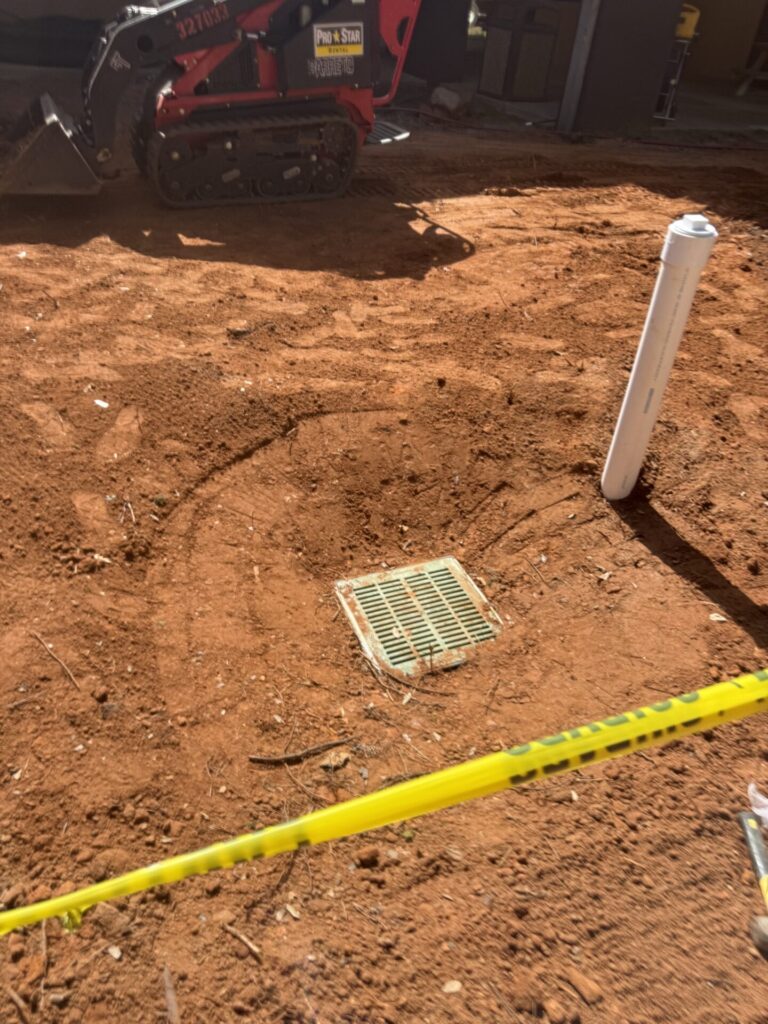
For this project, East Texas Leak Locators upgraded the system by:
- Replacing the 4-inch drainage line with a 6-inch line
- Giving the new line more fall to improve gravity flow
- Adding an additional collection box to help capture surface water
These improvements addressed both sides of the drainage equation: collecting the water and carrying it away.
The project is a good example of why commercial area drainage needs to be evaluated as a complete system. Simply putting another drain in a low spot may not solve the problem if the underground piping is undersized or does not have adequate fall.
Does Area Drain Pipe Size Matter?
Yes. Pipe diameter affects how much water an area drainage system can carry, but proper sizing should be considered alongside slope, collection points, drainage area, and other system conditions.
A commercial drainage system can receive water from several sources at once. Roof downspouts may feed into the same system as surface collection boxes, for example.
When evaluating an area drain, important factors can include:
- Size of the roof or surface drainage area
- Number of downspouts
- Number and location of collection boxes
- Diameter of underground piping
- Slope of the drainage line
- Length and configuration of the pipe
- Restrictions or blockages
- Amount of rainfall the system needs to accommodate
- Location where the water ultimately discharges
This is also why there is no single pipe size that is right for every commercial area drain.
For the Tyler project, increasing the existing line from 4 inches to 6 inches was one component of a larger drainage improvement that also included additional fall and another collection box.
Why Are Area Drains Important for East Texas Properties?
Area drains are important because East Texas properties can receive significant amounts of rain in relatively short periods, putting drainage systems to the test.
The Tyler area experiences periods of heavy rainfall throughout the year. When that rain lands on large commercial roofs and paved surfaces, much of it becomes runoff rather than soaking naturally into the ground.
A properly designed area drainage system can help direct that water away from places where it could interfere with the property.
Good drainage can help reduce:
- Recurring standing water
- Flooded walkways and entrances
- Water accumulation around buildings
- Erosion around drainage areas
- Disruptions to commercial operations
- Persistent drainage problems after storms
The key is addressing the cause rather than repeatedly dealing with the water after it accumulates.
Frequently Asked Questions About Area Drains
What is the difference between an area drain and a French drain?
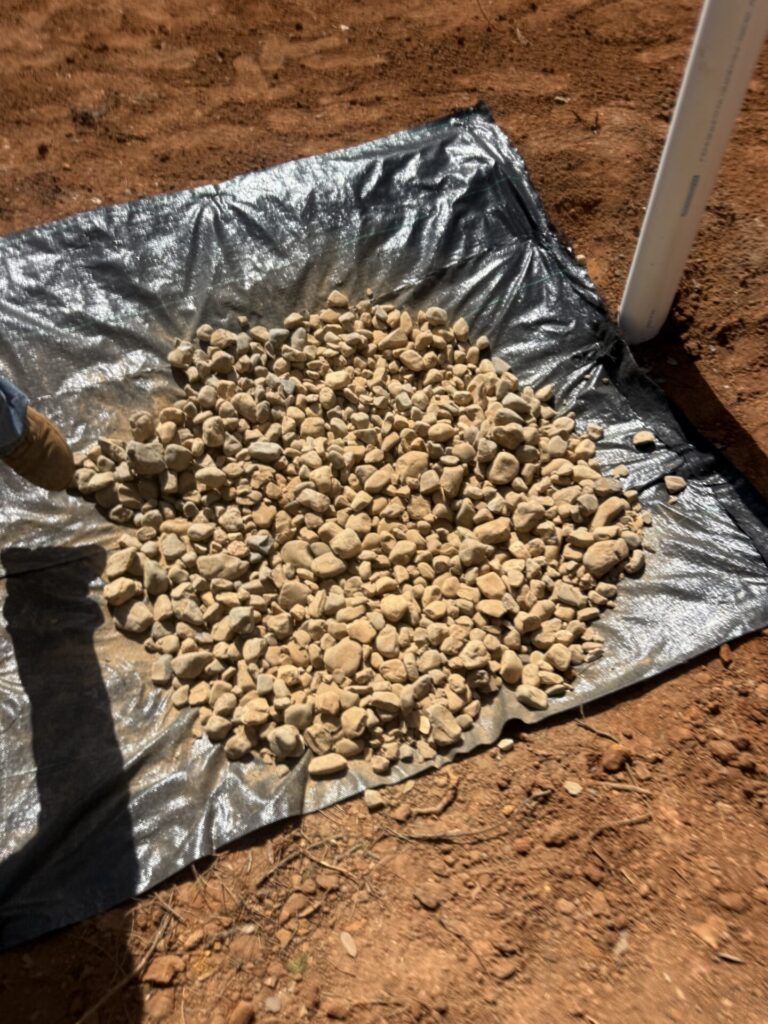
An area drain collects surface water at specific collection points and carries it away through underground piping. A French drain generally uses a gravel-filled trench and perforated pipe to collect and redirect water from saturated soil or surrounding areas.
Can downspouts connect to an area drainage system?
Yes. Downspouts can be incorporated into a drainage system designed to carry roof runoff away from a building. The system needs adequate capacity to handle the amount of water entering through those downspouts.
Why does my area drain back up during heavy rain?
An area drain may back up because of a blockage, inadequate pipe capacity, insufficient fall, too few collection points, or more stormwater entering the system than it can move away. Identifying the cause is important before deciding on a repair or upgrade.
Can you add an area drain to an existing commercial property?
Yes, depending on the property’s layout and drainage conditions. Existing systems can also sometimes be improved with additional collection points, larger drainage piping, better fall, or other modifications based on the source of the problem.
Need an Area Drain or Commercial Drainage Solution in Tyler?
If water repeatedly collects around your commercial property when it rains, the problem may be more than a clogged drain. Your property may need additional area drains, improved collection boxes, larger underground piping, better fall, or another drainage solution.
The recent 60,000-square-foot commercial project in Tyler is a great example. By upgrading the existing 4-inch line to 6 inches, increasing the fall, and adding another collection box, East Texas Leak Locators addressed the drainage system itself rather than simply treating the standing water.
If you have recurring drainage or flooding problems at your commercial property, contact East Texas Leak Locators to have the problem evaluated and find the right drainage solution for your property.